The Hip Flexor Test Everyone's Getting Wrong (+ What Actually Works)

Hi, I’m Jessica,
I’m a certified 500H Yoga Teacher specialized in flexibility & strength trainings and a Yoga practitioner for 14+ years
I’m not a dancer.
I’m not an ex-athlete.
I wasn’t a “naturally flexible” kid.
I built my movement after 40, through trial, error, and the realization that traditional training wasn’t cutting it.
I created a method that bridges the gap between strength and flexibility—without the fluff, without wasting time, and without forcing movements that don’t feel right:
FLEX&FLOW® a new way of movement.
There's a trend going around showing how to "measure your hip flexor strength"… and I need to lovingly call it out. 🫠
If you've been scrolling Instagram or TikTok lately, you've probably seen it. Someone standing next to a wall, hand pressed against it for balance, one leg extended in front of them, claiming this simple movement is the ultimate test of hip flexor strength. It looks easy. Most people pass. And that's exactly the problem.
The truth is simple, and I'm not here to sugarcoat it: this viral trend is not measuring your actual hip flexor strength. It mostly measures knee extension, hamstring flexibility, and a tiny bit of core engagement. If you are not fully immobile, you will probably "pass" this test. Which leads many people to believe their hip flexors are strong when they are not.
Let me explain why this matters and what you should be doing instead.
Why This Test Is Misleading (And What It's Actually Measuring)
When your hand is on the wall, when the leg is mostly bent, and when your core is not challenged, the body gets a lot of support. It creates a false impression of strength. The wall becomes a crutch. The bent knee reduces the load. Your core doesn't have to work to stabilize you.
The only moment that would require meaningful effort from your hip flexors is if you kept the extended leg lifted without leaning back, without momentum, and without using the wall for balance. But almost no one does that in this trend. Instead, what you're seeing is:
Knee extension strength: Your quadriceps doing most of the work to straighten the leg
Hamstring flexibility: Your ability to extend the leg forward without posterior chain tightness
Minimal core engagement: Just enough to not fall over, but not enough to challenge true hip flexor strength
This is why the test feels easy. It's not testing what it claims to test.
What a Real Hip Flexor Test Looks Like
If you want a real way to assess your hip flexor strength, especially the psoas (the deep hip flexor that connects your spine to your femur), you need to remove all the shortcuts and support systems.
Here's what an actual hip flexor strength test requires:
The Non-Negotiables
Upper body tall, strong, and straight: No leaning back to counterbalance. No rounding forward to compensate. Your torso stays completely vertical, which means your hip flexors have to do all the work of lifting and holding that leg.
Leg extended and lifted with control: Not just straightened, but actively lifted and held in space. This is where you'll feel the deep hip flexors engage, especially if you're maintaining height without dropping.
Foot flexed: This small detail matters. A flexed foot (toes pointing toward your shin) adds tension through the entire chain and prevents you from using momentum or "flinging" the leg up.
No momentum and no shortcuts: Every movement is controlled. You lift with intention, hold with strength, and lower with the same precision. This is not about speed or how high you can kick. It's about control, stability, and true strength.
And yes… when you try this version, you will immediately discover your true hip flexor strength. For most people, it's a humbling wake-up call. And that's exactly what makes it valuable.
This is the kind of precision and intelligence inside every FLEX&FLOW® program. Real strength, real mobility, real results. Not shortcuts.
My Favorite Hip Flexor Exercises (That Actually Work)
Now that you understand what real hip flexor strength looks like, let's talk about how to build it.
Not stretches. Not passive holds. Just my favorite hip-flexor exercises—the ones that actually improve mobility, stability, and control.
Here's the truth most people don't want to hear: You feel "tight" in your hips because the hip flexors are undertrained, not overstretched. You don't need another pigeon pose. You need strength.
When you build strength in your hip flexors, something magical happens. Your body finally feels safe in that range of motion. Strength signals safety. Safety gives you more range. More range reduces that nagging feeling of tightness.
This is the equation most people get backward:
They stretch and stretch and stretch, hoping to feel less tight
But without strength, the body never trusts that new range
So it stays tight as a protective mechanism
The solution? You need strength to stretch. Then watch your lower back pain vanish. Watch your squats deepen. Watch your movement feel effortless instead of forced.
Strength → signals safety → gives you more range.
[See all the exercises on Instagram →]
Save this for your next flow or strength session. 🤍
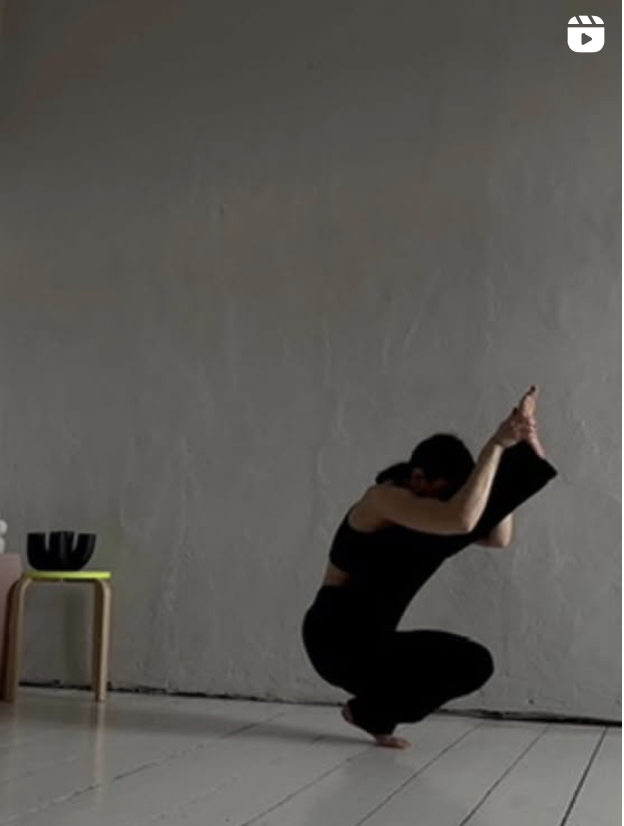
From the Ground Up: Why Your Feet Matter More Than You Think
Speaking of real strength and addressing the root cause instead of just the symptoms, let's talk about something most people completely overlook: your feet.
"Weak feet. Wobbly everything."
If you've ever wondered why your knees cave in during squats, why your ankles keep rolling even though you stretch and strengthen everything else, or why you can't hold a single-leg balance without wobbling like a newborn deer, chances are it's not your hips or quads causing the problem.
Your feet and ankles are the missing link.
Most overlooked, yet they are the foundation for everything:
Stable ankles and steady knees
Stronger movement everywhere
Smooth running and jumping
Wobble-free single-leg balance
Cramp-free toes during Pilates or yoga
Better squat mechanics
Reduced lower back compensation
The Real Problem: Your Brain Stopped Talking to Your Feet
Modern life has systematically weakened the connection between your brain and your feet. Think about it:
Supportive shoes: We wear cushioned, arch-supporting shoes that do the work our foot muscles should be doing. Your feet stop having to grip, balance, or adapt to surfaces.
Flat floors: We walk on perfectly even surfaces all day, every day. Your feet never have to problem-solve or react to changes in terrain.
Hours of sitting: When you're sitting, your feet are essentially offline. The neural pathways that connect your brain to those tiny intrinsic foot muscles start to go quiet.
The result? Compensation up the chain. When your feet can't do their job, everything above them has to work harder:
Tight calves trying to create stability
Wobbly hips overcompensating for weak ankles
Rolling ankles that can't support you
Knee pain from poor tracking
Stiff squat mechanics because your ankles won't dorsiflex
Inside FLEX&FLOW®, two signs pop up constantly, and they're both related to this brain-to-foot disconnection:
Sign #1: "I can't get my heels over my toes"
This isn't a flexibility problem. It's not about stretching your calves more. It's about ankle mobility, lower-leg strength, and foot mechanics all working together.
When your feet are weak and disconnected, your brain literally won't let you access your full ankle range of motion. It's a safety mechanism. Your nervous system knows those weak feet can't support you in a deep position, so it keeps you shallow and tight.
Sign #2: "My toes cramp instantly"
That's a brain-muscle connection issue, plain and simple. When you ask your foot muscles to work after years of being dormant, they don't know how to fire correctly. They either don't engage at all or they over-engage and cramp.
Once we retrain that connection, once your brain remembers how to communicate with your feet, everything changes. Your feet finally support you with control and confidence. And suddenly, movements that felt impossible become accessible.
What Changes When Your Feet Are Strong
When your feet and ankles are strong and connected, your whole body moves better:
Safer squats: Your knees track properly because your feet can create a stable base and your ankles have the mobility to let you descend with control.
Steadier hips: Your hips don't have to overwork to compensate for unstable feet. They can focus on their actual job: creating power and mobility.
Stronger knees: Knee pain often isn't a knee problem. It's a foot and ankle problem showing up at the knee. Fix the foundation, fix the pain.
Smoother running: Every stride becomes more efficient when your feet can absorb impact, adapt to terrain, and push off with real power.
More confident balances: Single-leg movements go from shaky and frustrating to strong and stable. Your feet become the anchor point they're meant to be.
Feet strength is not optional. It's foundational. Start at the ground and watch your movement transform from the bottom up.
The FLEX&FLOW® Kind of Chic
Because we're not just building strength here. We're building a lifestyle. A way of moving through the world that feels as good as it looks.
Things I find extremely chic:
Morning sun hitting my mat
A spine that moves like warm honey
Ankle weights paired with a good outfit
Being strong and soft at the same time
Coffee before mobility (non-negotiable)
Long lines and controlled transitions
Softness in the face, fire in the core
Slow days with intentional movement
Chic isn't just fashion. It's how you move. How you take up space. How you carry strength and softness simultaneously, without apology.
This is the FLEX&FLOW® kind of luxury: intentional movement, long lines, warm mobility, and a spine that actually feels good. Not performative flexibility. Not punishing workouts. Not movement that leaves you depleted.
Just strength that feels like ease. Mobility that feels like freedom. A practice that elevates your entire life.

Yes, Twist to Stretch Your Spine… But Here's What Actually Builds Mobility
You can twist to stretch your spine, and it will feel nice in the moment. That release, that satisfying crack, that temporary sense of space. I'm not saying twists are bad.
But if you want real, lasting mobility—the kind that shows up in your movement, not just in your stretching—you need strength in your length.
The twist feels nice. The strength teaches your body to actually use that space.
This is the difference between temporary relief and permanent change:
Stretching gives you a moment of range
Strength gives you ownership of that range
Mobility is what happens when you combine both
This is where your spine feels supported instead of stiff. Where your shoulders finally melt instead of grip. Where rotation doesn't require a warm-up and a prayer—it's just available to you, anytime you need it.
Mobility = strength in your length. And that's exactly what FLEX&FLOW® trains, in every single session.
Truths You've Been Avoiding (That Your Body Already Knows)
Let's get real for a moment. There are some truths about movement, rest, and progress that we all know deep down, but we keep ignoring because they're inconvenient or uncomfortable.
Your body already knows these things. It's been trying to tell you. Maybe it's time to listen.
Truth #1: Not Every Movement Deserves Your Energy
Not every exercise you think you "should" do actually serves you. Not every trending workout deserves a place in your routine. Not every movement that works for someone else will work for your body.
Quality over quantity. Always.
Truth #2: Rest Isn't a Reward
You don't have to earn rest. You don't have to "deserve" a recovery day. Rest isn't something you get after you've pushed hard enough.
You need rest to move with strength, ease, and longevity. Period.
Truth #3: "Advanced" Doesn't Mean Better
Your flexibility and strength aren't measured by how "advanced" you look in a pose or how impressive your movements are to other people.
They're measured by how capable you feel. How confident you are in your body. How free your movement is.
Truth #4: If It Costs Your Peace, It's Too Expensive
If a practice, habit, or routine consistently costs you your peace, your joy, your energy, or your mental health, it's too expensive. Full stop.
No workout is worth your wellbeing. No goal is worth burnout. No program is worth sacrificing your relationship with your body.
Truth #5: You're Allowed to Outgrow Things
You're allowed to outgrow movements that no longer serve you. Routines that used to work but don't anymore. Even people who don't grow with you or support where you're going.
Growth sometimes means letting go. And that's not just okay—it's necessary.
Listen to your body. Move with intention. Protect your peace. 💫
We're often chasing the "more"—more reps, more flexibility, more intensity, more busyness—forgetting that strength and freedom come from balance, not burnout.
Take a moment today to check in: Are you moving with intention or out of obligation? Are you honoring your body or punishing it?
Your peace, your strength, and your freedom are worth protecting.
FLEX&FLOW® Glow Habits for Lazy Days
Lazy days aren't about skipping everything or abandoning your routine. They're about adapting. Moving and resetting without the pressure, without the rush, without the guilt.
Here's how to honor your body while keeping your energy and flow intact, even when motivation is low and energy is lower:
Ease Into Movement: Don't Launch, Lengthen
Start your day with intentional movement, not urgency. Not a full workout. Not an intense flow. Just gentle, purposeful stretches or mobility work that wake your body without jarring it.
A few gentle FLEX&FLOW® stretches—some hip circles, spinal waves, shoulder rolls—wake your body without demanding anything from it.
Your muscles and nervous system will thank you. This soft start stabilizes your energy better than any coffee spike. It tells your body: "We're taking care of you today. No pressure. Just presence."
Bare-Minimum Breakfast: Fuel With Purpose, Effortlessly
Even on lazy days, protein matters. Your muscles are recovering. Your body is rebuilding. Your energy needs support.
But that doesn't mean you need to cook a three-course breakfast. Keep it simple:
Yogurt with nuts
Eggs on toast
A smoothie you barely have to think about
Simple, nourishing fuel supports recovery and mobility, so your body feels strong even when you're moving slowly. You're not looking for perfection. You're looking for function.
Two-Minute Wake-Up Anywhere: Lengthen, Open, Reset
Bed, couch, or floor—your fascia doesn't care where you are. It just needs some attention, some length, some gentle activation.
Reach tall overhead. Open your hips with a gentle figure-4 stretch. Roll your shoulders back and down. Circle your ankles. Stretch your feet.
Lazy-day wake-ups gently cue your body and nervous system into movement, with zero pressure. You're not trying to achieve anything. You're just reminding your body that it can move, that it's safe to move, that movement feels good.
Every little shift counts toward strength and flexibility. Even the ones that feel almost too easy to matter.
One Mini Move, Big Energy: Activate One Area, Shift Your Whole Body
Pick one small but intentional movement. Just one. Not a full routine. Not a whole workout. One focused, purposeful activation:
A few controlled hip hinges
Slow push-ups on the wall
A mini plank series (even just 20 seconds)
Some glute bridges
Controlled squats
Just 2–3 minutes of purposeful activation wakes your muscles, resets your energy, and keeps your body strong, even on lazy days.
The magic is in the intention, not the duration. You're telling your body: "We're still here. We're still strong. We're still capable." Even at half-speed.
The Lazy-Day Secret
Movement + nourishment + small wins = maintenance of everything you've built.
Even at half-speed, FLEX&FLOW® keeps your body strong, mobile, and ready for anything. Lazy doesn't mean stagnant. It doesn't mean you're losing progress or falling behind.
Lazy means gentle. Intentional. Adaptive. Kind.
It means honoring where you are instead of forcing where you think you should be.
A Gift Worth Giving (Starting With Yourself)
Let me tell you about something special that happened recently.
Iris joined the November THE FLEX&FLOW® Retreat at Parkhotel Mondschein. She experienced the depth of the work, the transformation that happens when you fully immerse yourself in this practice, the way everything shifts when you give yourself that kind of time and space.
And then she did something beautiful: she gifted her friend a 1:2 private session.
She felt the movements were meant to be shared. She understood that the depth a private allows is unmatched—the personalized attention, the specific corrections, the ability to go deeper into exactly what your body needs.
This is the kind of growth and evolution you'll find at my retreats. It goes beyond any studio class. It lifts both your physical practice and your mental reset and restart.
It's not just about the movements you learn. It's about:
How you reconnect with your body
How you release patterns you didn't even know you were holding
How you discover strength in places you thought were weak
How you leave feeling more yourself than you have in years
🎁 Join the next retreat in March and give yourself the gift of FLEX&FLOW®. What starts as a Christmas gift for yourself ends up giving so much more.
It ripples out into every area of your life. How you move. How you feel. How you show up.
The FLEX&FLOW® Retreat
26 to 29 March 2026
Parkhotel Mondschein, Bolzano
There is a reason we meet in March.
After months of winter, the body slows.
The fascia holds more tension.
Energy dips.
The mind gets heavier without us noticing.
Before summer arrives, March becomes a moment to restart, recharge, and reconnect with yourself through movement, nature, breath, rest, and presence.
A retreat that works as a true reset.
A spring awakening for your system.
Wake up supported.
Wake up lengthened.
Wake up strong.**
From 825 euros per person. Secure your spot →

The Bottom Line
Real strength isn't about passing viral tests or looking impressive in your workouts. It's about building a foundation that supports you in every movement, every day.
It's about:
Actually training your hip flexors instead of just testing them
Reconnecting your brain to your feet so your whole body can move better
Building strength in your length, not just flexibility without control
Moving with intention on the hard days and the lazy days
Protecting your peace as fiercely as you train your body
This is the FLEX&FLOW® approach. No shortcuts. No fake tests. No movements that look good but don't actually build anything real.
Just intelligent, intentional training that creates lasting change in your body and your life.
If this woke something up in you, if you felt something shift as you read this, that's your body telling you it's ready for more.
Move with intention. Protect your peace. Build real strength.
Your body already knows what it needs. 💫
Ready to experience the FLEX&FLOW® difference? Visit JESSICA KLIMACH FLEX&FLOW® SCULPTED STRENGTH & FLUID MOBILITY THE REVOLUTIONARY ALL-IN-ONE METHOD trust me, your body has never felt this good to learn more about my strength and mobility training programs. Your body has been waiting for this conversation.